
The term “parlor games” comes from the word “parlor” or “parlour,” which means a formal sitting room in a house, common during the 19th to early 20th century.
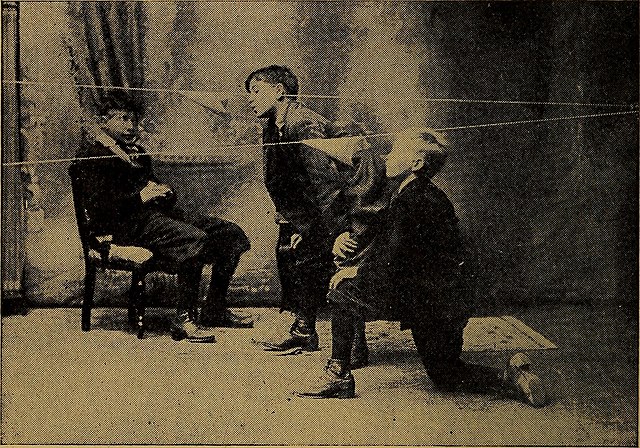
What is a "Parlor"?
In old Western homes, the parlor is a room where guests are received. It is a place to socialize, talk, and have a bit of light entertainment. It is a public-facing room (unlike the bedroom or kitchen). It is somewhat like a living room, but more formal.
Why "Parlor Games"?
Parlor Games are forms of entertainment or games that do not need special equipment, are played indoors (in the parlor), and are meant for guests, visitors, and family. These games are easy to learn, social and interactive, and can be played by any age and gender.
Some examples of Western parlor games include guessing games like Twenty Questions, I Spy, and Consequences; acting and miming games like Charades and Pictionary; physical and silly games like Pass the Slipper and Twirl the Trencher; and modern and adaptable games like Mafia or Werewolf, and Six Degrees of Kevin Bacon.
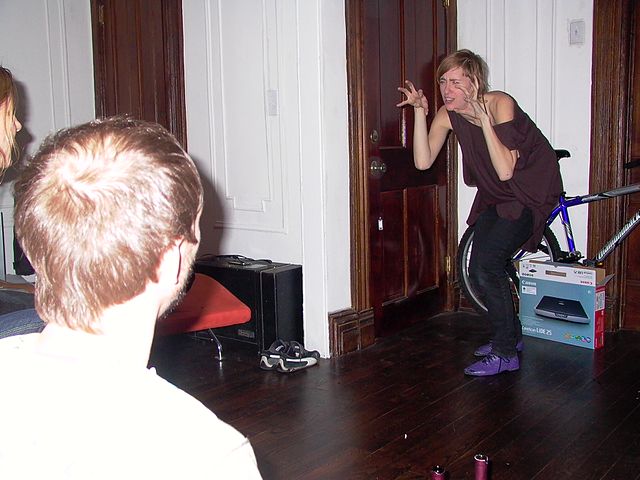
"Parlor Games" in the Philippines
During the American colonial period, some Western social customs were introduced to Filipinos, such as school activities, party games, and office activities. Along with adopting these, Filipinos also adopted the terms (like “Parlor Games”), which are often used in school programs, office parties, and Christmas celebrations.
Over time, “Parlor Games” became the general term we use for any group party game during events, even if it is not held in a parlor or even if it is outdoors. It has become a tradition that gets passed from one party to another.
In the Philippines, Parlor Games are usually icebreaker games, often group-based, sometimes a bit embarrassing to play, and usually require a super duper energetic emcee.
Here are a few examples of our local Parlor Games:
Bring Me
Bring Me is a popular parlor game in the Philippines, most often played during birthday parties, reunions, and town fiestas. It is a high-energy “scavenger hunt” where the host calls out a specific item, and participants race to be the first to bring that object to the front to win a prize.
How it works:
The Prompt: The host starts by shouting, “Bring me…!” followed by an item (e.g., “Bring me a 5-peso coin!” or “Bring me a red shoe!”).
The Race: Players dash to find the item, often borrowing it from guests or digging through their own bags.
The Twist: To make it more entertaining, hosts often ask for difficult or “out-of-the-box” things, such as:
A picture of a grandfather.
A white hair (plucked on the spot).
The person with the longest keys.
Someone with a specific “rare” app on their phone.
It is beloved because it’s fast-paced, requires zero equipment, and usually results in a lot of laughter and friendly chaos.
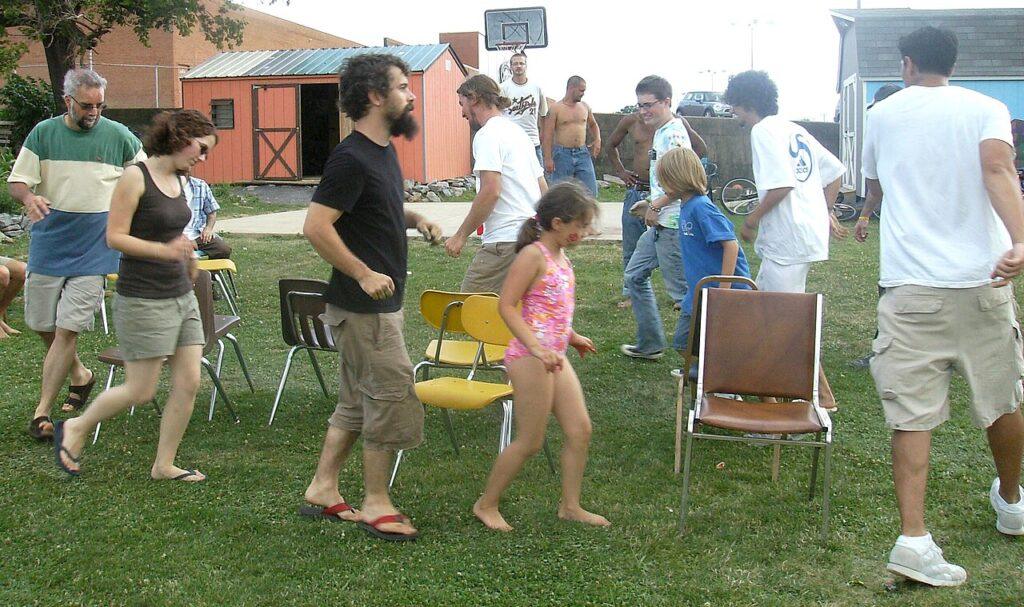
Trip to Jerusalem
Trip to Jerusalem (the local name for Musical Chairs) is a staple of Filipino parties, from children’s birthdays to chaotic office Christmas parties. It is known for being high-energy, highly competitive, and often a bit “physical” as people scramble for a seat.
How it works:
The Setup: A circle of chairs is placed in the center of the room, with one chair fewer than the number of players.
The Music: The host plays upbeat music (often novelty Filipino hits or 90’s dance tracks) while players dance or walk in a circle around the chairs.
The Scramble: When the music suddenly stops, everyone must find a seat. The person left standing is eliminated.
The Finale: One chair is removed after each round until only two players and one chair remain for the final showdown.
In the Philippines, the game often gets a boost from a witty host who encourages “agawan” (scrambling). It isn’t uncommon to see players jokingly, or seriously, trying to hip-check their way into a seat or sitting on each other’s laps to claim victory.
Pinoy Henyo
Pinoy Henyo (Filipino Genius) is a popular word-guessing game in the Philippines, famously popularized by the long-running variety show Eat Bulaga!. It is often called the “Pambansang Laro” (National Game) because it’s played everywhere – from classroom breaks to high-stakes office parties.
How it works:
The Duo: Played in pairs. One person wears a headband with a word on their forehead, while the other provides clues.
The “Yes/No/Maybe” Rule: The person with the word must guess it by asking questions. The partner can only answer with:
“Oo” (Yes)
“Hindi” (No)
“Pwede” (Maybe/Can be)
The Strategy: Guesser usually starts by narrowing down categories: “Tao?” (Person?), “Bagay?” (Object?), “Lugar?” (Place?).
The Clock: There is usually a 2-minute time limit. If they guess it faster, they win.
It tests how well a pair can communicate under pressure. It often leads to hilarious shouting matches when the guesser gets stuck on a very simple word like “Kutsara” (Spoon) or “Puto” (Steamed rice cake).
Paper Dance
Paper Dance is a classic Filipino party game that tests both balance and teamwork. It is a staple at weddings, reunions, and birthday parties, often resulting in hilarious displays of “clinging for dear life.”
How it works:
The Duo: Played in pairs (usually a man and a woman, or two friends).
The Paper: Each pair stands on a single sheet of newspaper spread flat on the floor.
The Dance: Music plays, and pairs must dance around (or on) their paper. When the music stops, both partners must be standing entirely on the paper without any part of their feet touching the floor.
The Fold: After every round, the host instructs the pairs to fold the newspaper in half, making the standing area smaller and smaller.
The Elimination:
As the paper shrinks to the size of a postcard, pairs have to get creative to stay “on board.” This usually involves:
One partner carrying the other “piggyback” style.
Balancing on tiptoes together.
Hugging tightly to maintain center of gravity.
The last pair standing on their tiny square of paper wins the prize.
Balloon Popping
Balloon Popping is a high-energy, often chaotic game that is a staple of Filipino children’s parties and “Parlor Games” during barangay fiestas. It is known for being loud, fast-paced, and filled with a lot of jumping.
How it works:
The Goal: Be the first person (or team) to pop all your assigned balloons.
The Method: The catch is that you cannot use your hands or any sharp objects. Players must pop the balloons using their body weight – usually by sitting on them.
The Variations:
- Individual: Each player has a balloon tied to their ankle, and they must stomp on others’ balloons while protecting their own.
- Partner: One person holds the balloon against their body, and the partner hugs or bumps them hard enough to make it go pop.
- Relay: A line of players takes turns running to a chair, placing a balloon on it, and sitting on it until it bursts before the next person can go.
The combination of the loud “bang” and the frantic movements always gets the crowd cheering. It often results in funny moments where players bounce off the balloons because they aren’t heavy enough or are too hesitant to commit to the “sit.”
Balloon Popping (Adult Version)
The Adult Version (or “Naughty” version) of the balloon popping game are usually reserved for late-night Christmas parties, bachelor/bachelorette parties, or weddings where the crowd is a bit more “game” for some rowdy humor.
1. The “Lap Pop” (Sitting on the Lap)
This is a classic icebreaker for couples or pairs who aren’t shy.
The Setup: The male partner sits firmly on a chair. A balloon is placed on his lap.
The Action: The female partner has to jump or sit down forcefully on the balloon to pop it.
The Comedy: It usually leads to a lot of “near misses” and laughter from the audience as the pair tries to get the right angle and force without anyone actually getting hurt (or falling off the chair).
2. The “Pop from Behind”
The Setup: One partner (often the girl) leans over or holds onto the back of a chair for stability. A balloon is held against her backside.
The Action: The other partner (the guy) has to pop the balloon by bumping into it completely hands-free.
The Result: It’s basically a high-speed, high-pressure “bump” that is meant to be suggestive and funny, usually accompanied by a lot of teasing from the host.
3. The “Hugging” Pop
The Setup: The partners stand face-to-face with the balloon sandwiched between their chests.
The Action: They have to “hug” each other as hard as they can until the balloon bursts. This one usually ends with a lot of awkward squeezing and accidental head-bumps!
Stop Dance
Stop Dance is the quintessential Filipino icebreaker, known for being the ultimate test of “frozen” discipline. It is a staple at school events, family reunions, and children’s parties because it is incredibly simple but always results in someone falling over or being caught mid-wiggle.
How it works:
The Groove: The host plays high-energy music, and everyone on the dance floor starts dancing their heart out.
The Freeze: The moment the music stops, every player must freeze in their exact position.
The Elimination: “Judges” (usually the host and a few audience) walk around trying to catch anyone moving, wobbling, or even blinking too much. If you move, you’re out!
The Last One Standing: The music starts and stops at random intervals—sometimes for just a split second—until only one dancer remains.
The “Filipino Twist”
To make it harder, hosts often give instructions while the music is playing, like:
“Dance like a chicken!”
“Dance like you’re washing clothes!”
“Dance with one leg up!” (Making the “freeze” nearly impossible to balance).
It’s especially funny when the music stops while someone is in a particularly awkward or mid-air pose, leading to a desperate struggle to stay still.
Calamansi Relay
Calamansi Relay is the ultimate test of patience and steady nerves. It’s a classic Filipino school intramurals and birthday party game that proves how difficult it is to walk when your mouth is doing all the work.
How it works:
The Setup: Players are divided into teams. Each player holds a spoon in their mouth by the handle.
The Cargo: A single, tiny calamansi (Philippine lime) is placed on the spoon of the first player in line.
The Race: On the signal, the first player must walk (or shuffle quickly) to a turnaround point and back without dropping the fruit.
The Hand-off: This is the hardest part. They must “transfer” the calamansi to the next teammate’s spoon without using their hands.
The Penalty: If the calamansi falls, the player usually has to pick it up, go back to the starting line, and try again.
The tiny size and round shape of the calamansi make it incredibly prone to rolling off at the slightest tremor. It’s hilarious to watch players try to keep a “poker face” while their teeth are clenched, especially when they reach the transfer point and have to awkwardly tilt their heads to pass the fruit.
The Flour Game
The Flour Game, sometimes called “The Marshmallow Challenge” depending on what is being eaten, is easily the messiest game at any Filipino gathering.
How it works:
The Goal: Players must retrieve a specific item, usually a coin or a piece of candy hidden at the bottom of a plate or tray.
The Catch: Your hands must be tied behind your back (or you must keep them strictly behind you).
The Flour: The item is buried under a thick layer of all-purpose flour or cornstarch.
The Technique: Players have to blow the flour away and use only their mouths to “fish” for the prize.
By the end of the round, every participant looks like a “ghost” because their entire face is covered in white powder. It’s a photographer’s dream because of the “puff” of flour that happens every time a player exhales, and it usually ends with everyone, including the audience, laughing at the snowy mess.
Other “No Hands” Variations
Hanging Calamansi/Marshmallow: Eating a piece of food dangling from a string.
Watermelon Eating: A race to finish a slice of watermelon as fast as possible using only your face.
Hep-Hep Hooray
Hep-Hep Hooray is a high-pressure coordination game that became a phenomenon in the Philippines through the variety show Wowowin. It is essentially a rhythmic elimination game that tests how well you can follow a beat without getting “mental block.”
How it works:
The Formation: Players usually stand in a circle or a line.
The Movements:
“Hep-Hep”: The player must clap their hands together in front of (or below) their chest.
“Hooray”: The player must raise both hands in the air (like a cheer).
The Rhythm: The host controls the pace using a microphone and moves rapidly between players in no particular order. The game follows a strict “A-B” alternating pattern:
The First Pick: The host points the mic at a random player. That player must immediately shout “Hep-Hep!” while doing the double-clap gesture.
The Second Pick: The host quickly swings the mic to another random player (or even the same one!). This player must instantly shout “Hooray!” while throwing their hands in the air.
- The Cycle: The next person picked goes back to “Hep-Hep,” the one after that does “Hooray,” and so on.
The Elimination: If a player does the wrong gesture, misses the beat, or forgets to move, they are out.
The speed increases as the game goes on, and the host often tries to “trick” players by staying on one person for multiple “Hep-Heps” in a row. It’s famous for causing “brain farts” where a player knows exactly what to do but their body does the opposite, usually resulting in them doing a “Hooray” when they should have clapped.
Longest Line
Longest Line is the ultimate teamwork game that proves Filipinos will literally give the shirts off their backs to win a prize. It is a high-stakes scavenger hunt of sorts, usually played in large open spaces like basketball courts, function halls, or streets during a fiesta.
How it works:
The Goal: Teams must create the longest, unbroken line on the floor using only the items they have on their person at that exact moment.
The “Unbroken” Rule: Every object must touch the next one. If there is a gap, the line “ends” there.
The Items: It starts with the basics – bags, shoes, belts, and wallets.
The Escalation: As the competition heats up and teams see their rivals getting ahead, things get desperate. It’s common to see people laying down:
Socks and shoelaces (tied together).
Jackets and neckties.
ID lanyards.
Loose change or receipts.
Even the players themselves (laying face down on the floor to bridge a gap).
It perfectly captures the “Bayanihan” (communal unity and cooperation) spirit and the competitive nature of Filipino parties. There is a hilarious level of chaos as teammates frantically strip off their accessories, and sometimes their outer clothing, just to gain an extra few inches. The game usually has a strict time limit. Once the timer hits zero, everyone must stop moving and step back from their line. The host then walks the length of the room to judge which team’s trail of shoes, wallets, and shoelaces has covered the most ground.
Parlor games may have started in formal sitting rooms of the past, but today they live on in classrooms, offices, and celebrations across the Philippines. Whether simple, silly, or competitive, these games continue to bring people together, proving that good fun doesn’t need fancy equipment, just willing participants.