
If you grew up in the Philippines during the golden age of Japanese sentai shows on TV, chances are you’re familiar with Choudenshi Bioman. You probably memorized its theme song by heart, had your own favorite character to play when you and your friends were pretending, learned how to count (up to five) because of it, and maybe it even influenced your favorite color.
Among the five members of Bioman, there was one character who secretly shaped my childhood in a way I didn’t expect. Who?
Pink Five. My first childhood crush 😍 And I think I’m not alone 😁
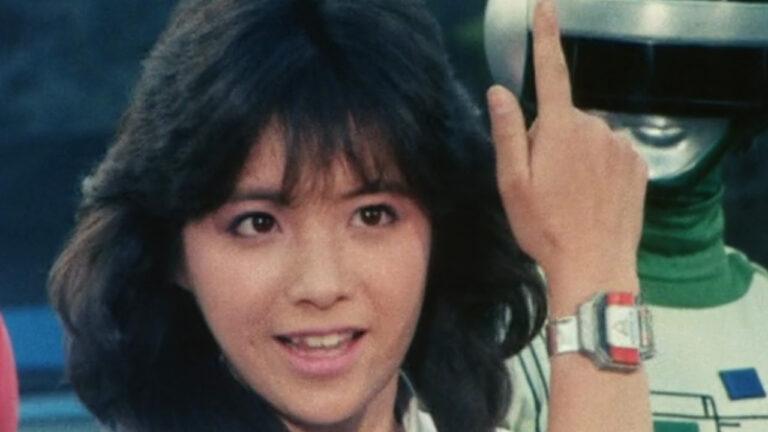
Choudenshi Bioman
Choudenshi Bioman (Super Electron Bioman), which aired in 1984, holds an important place in the history of the Super Sentai metaseries. As the eighth installment by Toei Company in their franchise, it successfully replaced Kagaku Sentai Dynaman and was followed by Dengeki Sentai Changeman. The series aired 51 episodes on TV Asahi, from February 4, 1984, to January 19, 1985. Coming from the Japanese tokusatsu genre, the show attracted viewers because of its live-action characters, special effects, and sophisticated mecha designs.
Tokusatsu is a Japanese genre of live-action entertainment that relies heavily on special effects.
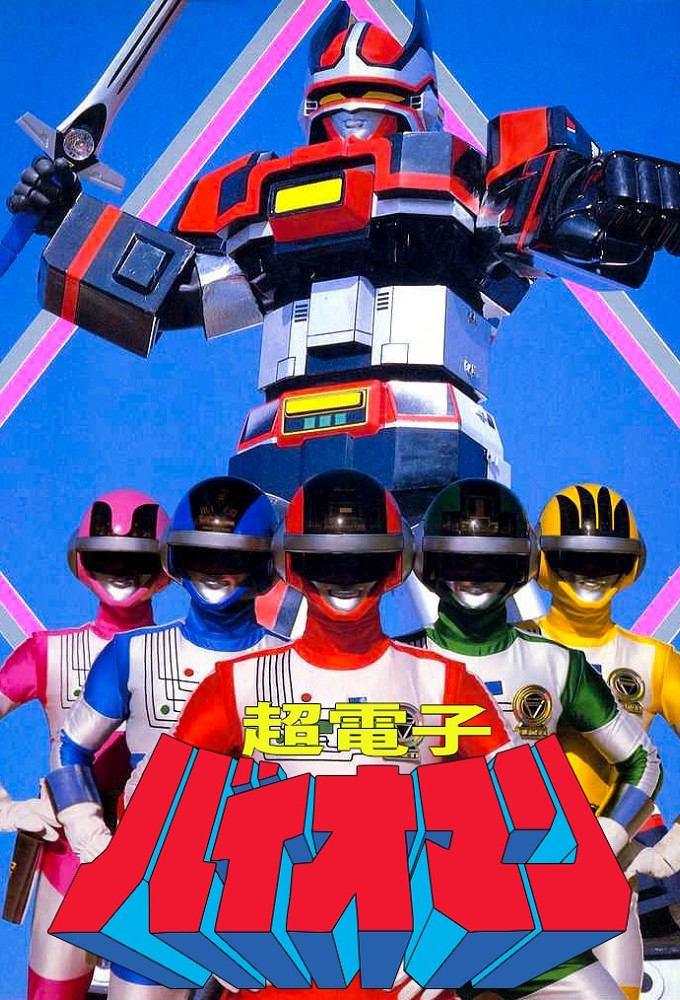
The main story of Bioman centers on an attack on Earth by the Neo Empire Gear, led by the mysterious Doctor Man. This invasion prompted the ancient robot Peebo and the giant Bio Robo to awaken and choose five individuals descended from those who were genetically blessed by visitors from the distant Planet Bio. These five individuals were granted “Bio Power” to become the Bioman and defend the world from technological oppression.
Historically, Choudenshi Bioman is recognized for introducing a major structural change that permanently altered the trajectory of the Super Sentai metaseries.
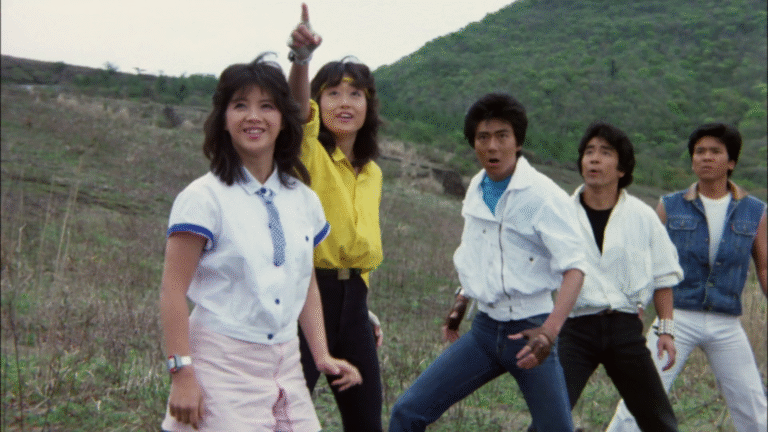
It was the first series in the franchise to feature two main female members in the standard five-person roster: Pink Five (Hikaru Katsuragi) and Yellow Four (initially Mika Koizumi, later replaced by Jun Yabuki). This decision was not just cosmetic; it expanded the possibilities of character dynamics and allowed for deeper emotional and strategic complexity within the team.
The successful inclusion of two female leads immediately established the long-lasting “tall yellow/short pink” dynamic, a relational template that provided an archetypal contrast for female rangers in the decades that followed. The need to develop distinct personalities, skill sets, and narrative arcs for Hikaru Katsuragi and Yellow Four proved the commercial viability and storytelling potential of having multiple female protagonists. This expansion of the core cast structure is seen as part of a general “leveling up” for the production team, showing that the franchise could move beyond its previous limitations and set a new standard for deeper storytelling and character integration.
The original Yellow Four, played by Yuki Yajima, left the series due to unspecified production problems. Since the actress was no longer available, the creators removed her character, Mika Koizumi, by killing her off in Episode 10, where she sacrificed her life for her teammates. A new character, Jun Yabuki, was introduced to replace her as Yellow Four II. Because of the sudden departure, from Episodes 7 to 10, Yellow Four’s lines were delivered by a voice actress (Mayumi Tanaka), while her stunt actor performed in the yellow suit.
Hikaru Katsuragi / Pink Five
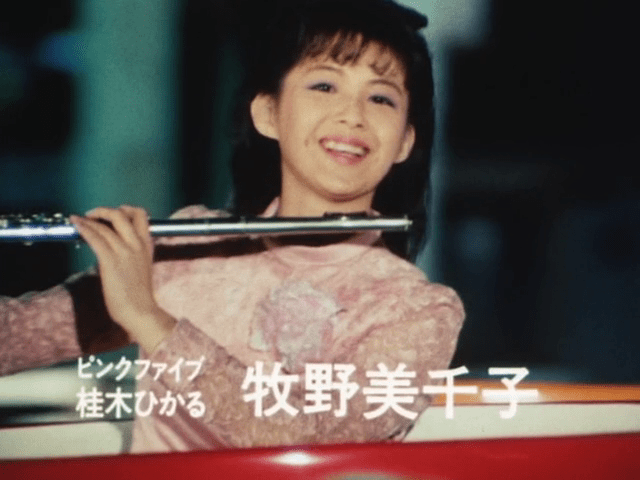
Pink Five is known by her civilian name, Hikaru Katsuragi. This very (cute and) meaningful character was played by actress Michiko Makino, who got the role after a comprehensive audition process in 1984. Hikaru’s identity within the team is not defined by raw combat skill or outright leadership, but by her deep empathy and naturally emotional nature.
Hikaru Katsuragi is described as “the most emotional member of the team.” This trait is not treated as a weakness, but as a critical part of the storytelling, positioning her as the compassionate heart of the group. Her sensitivity serves as an important counterpoint to her more tactical and combat-focused teammates. The series emphasizes that Hikaru’s emotional depth is a form of strength, especially when facing the Neo Empire Gear, an antagonist built on mechanical logic and the cold intellectualism of Doctor Man.
One of Hikaru’s unique traits is her traditional mental discipline: “She plays the flute to calm and strengthen herself.” The combination of intense emotion and a ritualistic, artistic pursuit reflects a progressive approach to character development in the tokusatsu genre at that time. The emphasis on inner and emotional discipline, rather than purely physical training, suggests that emotional intelligence and empathy are essential to the team’s success. Furthermore, since her ability to connect with others is crucial in the series, her emotions are portrayed as an engineered superpower directly derived from her inherited Bio Power. This trait makes her the only character capable of resolving the central moral conflict of the series.
How can you not fall in love with that? 😁🥰
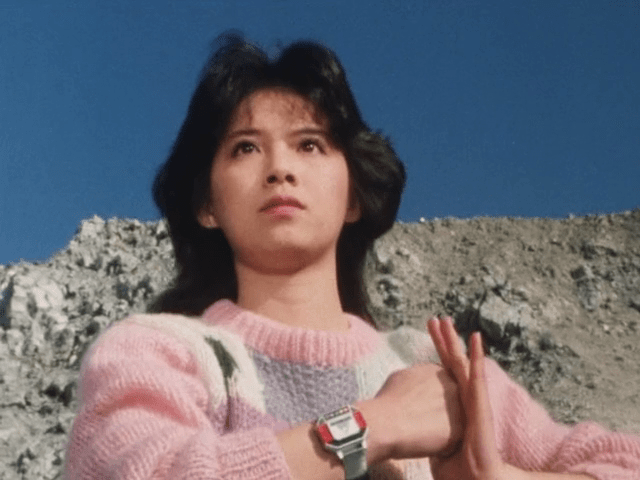
Combat and Technological Capacities
Hikaru Katsuragi’s combat profile reflects her role as a defensive and supportive fighter, specializing in the use of advanced technology derived from the legacy of Planet Bio.
Bio-Powered Abilities and Armament
Pink Five’s abilities are channeled through her Bio Brain Computer. This internal system allows her to deploy her unique power: the Super Electron Beamlight. This “Super Electron” capability is distinct and highlights her technological contribution compared to her teammates.
In close combat, Pink Five uses her Laser Sword. Her specialized techniques emphasize her protective and supportive nature. Her signature attacks include Pink Flash, Spin Chop, and most notably, the defensive technique Pink Barrier. The presence of a dedicated defensive barrier attack perfectly aligns with her role as the team’s protector and nurturer.
Supportive and protective. What more can you ask for? 😍
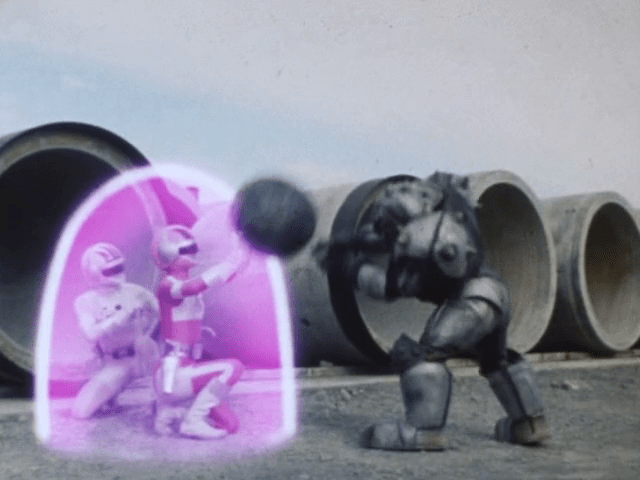
Mecha Integration: Co-Piloting the Bio Jet 1
In the field of giant robot warfare, Pink Five holds a structurally critical position within the Bioman arsenal. She is a co-pilot of Bio Jet 1, the primary vehicle used by the team, alongside Red One, their team leader. This fighter jet forms the first and main component of the combined super-robot, Bio Robo.
Being part of the main mecha component together with the team leader is unusual for the Pink Ranger archetype, which in many later series is often assigned to a minor or ancillary part. This detail suggests that Pink Five’s tactical contribution is highly valued, positioning her as a strategic co-commander alongside Red One. It confirms her importance in the overall team structure.
Defining Narrative Arcs and Ethical Conflict
Hikaru Katsuragi’s character development is deeply tied to the philosophical conflict at the core of Choudenshi Bioman. Her stories highlight the power of human connection against mechanical rigidity, especially through her interactions with antagonists caught between mechanism and morality.
The Brain Storyline: The Ultimate Test of Empathy
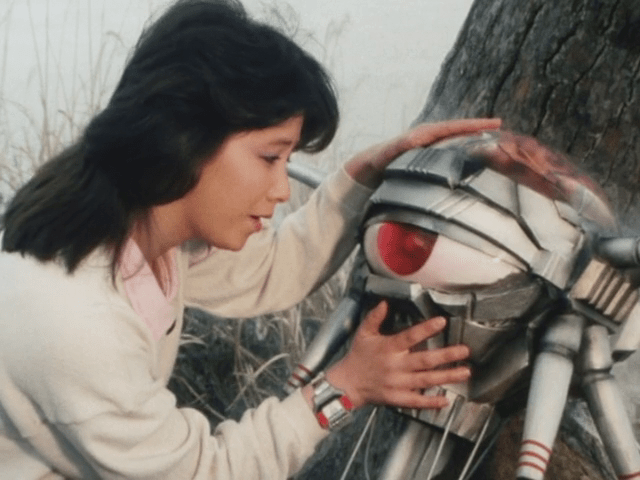
Pink Five’s most significant narrative involves her relationship with the Neo Empire Gear’s advanced tactical computer, Brain. This story arc, introduced in Episode 14, “Neo Intellect Brain!”, presents Hikaru with a challenge uniquely suited to her empathetic abilities.
Pink Five achieves an impressive act of moral diplomacy: she successfully “befriends the evil computer Brain.” Through emotional engagement, she teaches pure logical intelligence about friendship and fundamental human values. This emotional education ultimately leads to Brain’s moral awakening and a profound shift in loyalty. In a powerful climax, Brain sacrifices itself to save the Bioman and the world from destruction at the hands of Gear.
This arc establishes Pink Five as the philosophical hero of the series. Doctor Man’s ideology is based on the superiority of mechanical life and the dehumanization of existence. Hikaru proves that even the enemy’s most sophisticated artificial intelligence can be “reprogrammed” through human connection and emotion, leading to a crucial and non-violent narrative victory. This success sets a strong example of emotional diplomacy in confronting technological threats.
Stability amidst Transition
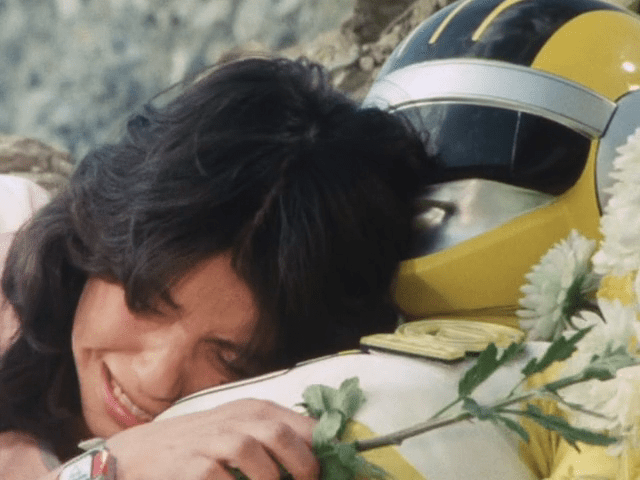
Pink Five’s character also provided essential emotional stability during a rare and challenging narrative event: the mid-season replacement of Yellow Four. The original Yellow Four, Mika Koizumi, tragically died early in the series, sacrificing herself to deplete the Bio Killer Gun’s anti-Bio Particle ammunition. Bioman is historically noted as the last Super Sentai series to feature a mid-season Ranger change. During the period of mourning and transition leading to the introduction of Jun Yabuki (Yellow Four II), Hikaru’s empathy and resilience were crucial in maintaining the team’s functional unity and serving as a steady emotional anchor amid internal conflict and loss.
The Legacy of Michiko Makino

The lasting appeal of Hikaru Katsuragi cannot be separated from the career and continued public presence of the actress who portrayed her, Michiko Makino. Her journey highlights the long-term impact of a tokusatsu role on an actor’s life and the relationship between performer and fan community.
Career Progression and Entrepreneurship
Before her role in Bioman, Michiko Makino was an active figure in the entertainment industry in the early 1980s, working as an idol, appearing in commercials, and posing for magazines. She secured the role of Pink Five in 1984 after several rigorous interviews and auditions. After her performance in the 51-episode series, she continued her media career for about two years, mainly working as a television show hostess.
Following her marriage and the birth of her two sons, Michiko Makino transitioned into specialized entrepreneurship. She and her husband now run a seafood and fish shop in the famous Tsukiji district in Tokyo. This retail venture, specializing in products like tsukudani, continues to benefit from the district’s reputation as a culinary hub. Her ongoing public visibility, often greeting customers with a smile, contributes to the nostalgia associated with the Bioman brand. This successful transition into a local and specialized business while maintaining a celebrity profile demonstrates the enduring power of the Bioman legacy, where her role in 1984 continues to support her present-day business, often through fan tourism and word-of-mouth promotion.
Continued Community Engagement and Legacy Cameo
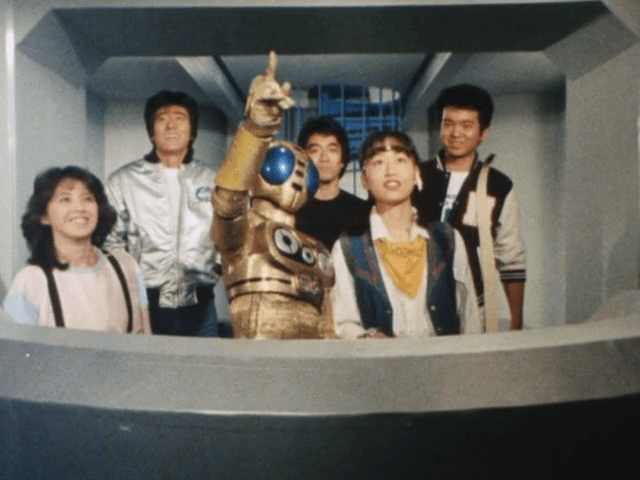
Michiko Makino continues to maintain strong ties with the tokusatsu fan community. She regularly participates in interviews and public events. She is also active in her performance group 2828 (Niyaniya), led by Ryôsuke Kaizu, the Red Mask actor from Hikari Sentai Maskman. This ongoing involvement reflects the tight-knit community of classic Super Sentai actors. She participated in a full Bioman team reunion at Japan Expo to celebrate the show’s 35th anniversary, alongside other original cast members like Ryôsuke Sakamoto (Red One) and Sumiko Tanaka (Yellow Four II).
Her status as a respected heroine was formally reaffirmed when she took part in the franchise’s traditional legacy cameo. She appeared in the final episode (Episode 51) of the 2018–2019 series Kaitou Sentai Lupinranger VS Keisatsu Sentai Patranger. Michiko Makino appeared as a restaurant customer alongside her co-star Sumiko Tanaka (Yellow Four II) and two other nostalgic Sentai heroines. This symbolic role serves as a bridge between generations within the franchise and formally confirms the historical continuity of the Super Sentai metaseries. Her appearance alongside Yellow Four II celebrates the groundbreaking innovation of having two female members in the original team structure.

Cultural Resonance and Global Diffusion
Choudenshi Bioman was a critical success not only in Japan but also internationally, serving as a primary driver for the globalization of the Super Sentai metaseries and Japanese popular culture.
International Success in Asia and Europe
Bioman’s success helped establish Super Sentai as a significant media export. In Europe, the show achieved legendary status in France, where it was dubbed and broadcast first in 1985 and again in 1987. This success reinforced its status as a must-see for early pop culture fans.
In Asia, Bioman had a massive and long-lasting impact, particularly in the Philippines. It aired on ABS-CBN from 1987 to 1988 and remained popular until the early 1990s. This sustained regional interest reshaped the perception of tokusatsu and mecha content in the country. The global success of Bioman, especially in markets where it was dubbed and broadcast as an independent product, highlights its massive cultural contribution.
Why Pink Five Still Matters (To Me) Today
As I write this, with Bioman playing in the background, I still find myself smiling whenever I think of Pink Five 😁 Not just because she was my first crush, but because she represents an era when life was so simple when we were kids, when a single TV show could make our whole day. With a bit of kilig (that fluttery romantic feeling).
Pink Five is not just part of Bioman. She is part of my emotional origin story. She was the first one who gave me butterflies in my stomach. Funny story – I remember telling my friends when I was young: “When I turn 10, maybe she’ll be 20. When I’m 20, she’ll only be 30. We can still be together. I’ll go to Japan and find her.” 🤣
Maybe that’s why it’s hard for me to forget Bioman.
Final Thoughts: A Pink Memory That Never Fades
Having childhood crush(es) is funny. You don’t choose them… they just happen.
Pink Five will always remain as the first heroine who introduced me to the idea of admiration and love.
Even now, whenever I see clips of Bioman, I still feel that warmth of nostalgia. It reminds me of simpler times – just sitting in front of the TV on a Sunday afternoon, excited – because of a heroine in pink who unknowingly captured my young heart 🥰
