
Did José Rizal and Josephine Bracken greet each other with a high five? Did the Presidential Guards of Emilio Aguinaldo high five after they assassinated Antonio Luna? The high five is not an ancient gesture as some might think, and its true origin is a topic of historical debate that often centers around American sports.
The Precursor: The Low Five
Before the “high five” existed, of course it started with the “low five.” The low five is a similar hand-slapping gesture that is part of African-American culture, which may have started as early as the 1920’s (Jazz Age) or possibly during World War II. During that time, expressions like “give me five” or “gimme some skin” became popular, meaning you are asking for this kind of handshake or hand slap. In case you didn’t know, “five” refers to the five fingers of a hand.
The Most Popular (and Most Accepted) Origin Story
The most commonly mentioned and most documented origin of the “high five” happened during a professional baseball game.
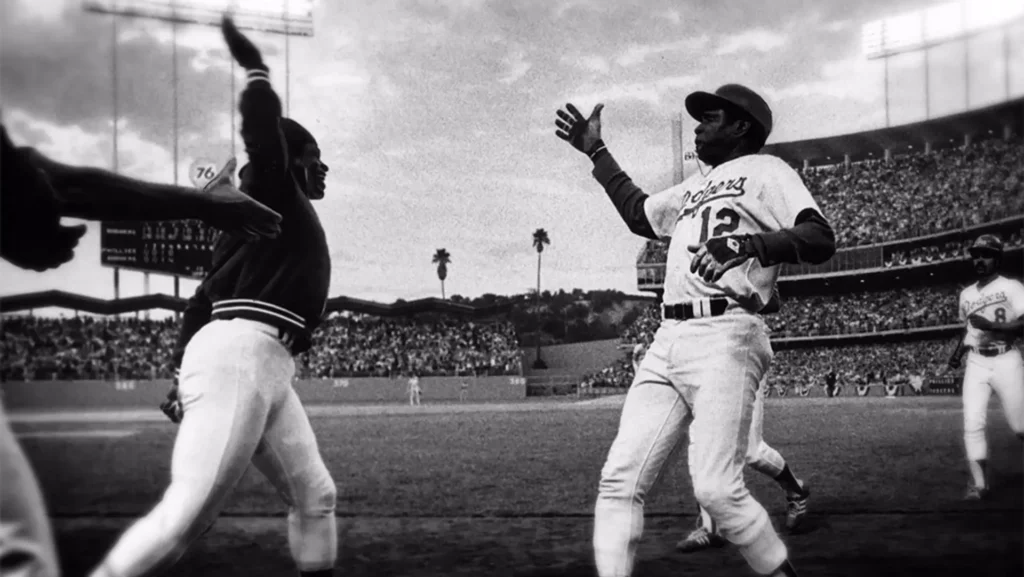
On October 2, 1977, it was the last day of the regular season of MLB (Major League Baseball) 1. The Los Angeles Dodgers were playing against the Houston Astros at Dodger Stadium. At that time, three Dodgers hitters (Steve Garvey, Reggie Smith, and Ron Cey) already had 30 home runs, while another hitter, Dusty Baker, had 29. In the sixth inning, Baker hit his 30th home run. The Dodgers became the first team to have four hitters with 30 or more home runs in a single season. Dodgers player Glenn Burke raised his hand at home plate to greet Baker. According to the story, Baker didn’t know what to do with Burke’s raised hand, so what he thought of doing was to raise his own hand and slap Burke’s hand. And that’s how the “high five” was invented.
The College Basketball Contender
Another claimed origin story of the “high five” supposedly happened during a basketball practice of the University of Louisville Cardinals in the 1978–1979 season. Wiley Brown approached his teammate Derek Smith to give him a traditional “low five.” Smith reportedly looked Brown in the eye and said, “No. Up high.” Brown then thought about it and said, “Yeah, why are we staying down low? We jump so high.” So they raised their hands, and according to this story, the “high five” was born there.
Magic Johnson
According to Magic Johnson, he was the one who invented the “high five.” He said that occasionally, he and his teammate Greg Kesler used it when they were still playing at Michigan State.
"The Five" Hoax
In 2007, according to two comedy writers who were founders of “National High Five Day,” a Murray State University basketball player named Lamont Sleets invented the “high five” in the late 1970s to early 80s. He supposedly learned it from his father’s Vietnam War unit called “The Five.” In 2013, the two writers admitted that this was just a publicity stunt. By the way, “National High Five Day” is celebrated every year on the third Thursday of April.
Cultural Significance
Whoever the exact inventor is, the “high five” became an instant, energetic, and universal gesture of celebration, solidarity, encouragement, and success, especially in sports.
Apir!
The “high five” is a common and accepted gesture in the Philippines, used to express congratulations, agreement, or even just a simple greeting. Our unique and localized term for high five is “Apir.”
Origin of “Apir”
Filipino linguists believe that “Apir” is an adaptation of the English phrase “Up here!”, which is also a variation of “high five.”
Use of “Apir”
Just like saying “High Five!” or “Give Me Five!”, Filipinos also use the word “Apir!” as a signal that you want to slap hands with someone.
Popularity
“Apir” has become part of Pinoy culture, especially among the younger generations, and is often used in sports and entertainment.
Like in other parts of the world, it also symbolizes positivity, camaraderie, and team spirit.
And just like “pagmamano” 2, or the more modern “fist bump,” doing an “apir” is also a form of greeting.
Ayun lang. (That’s it.) Apir!